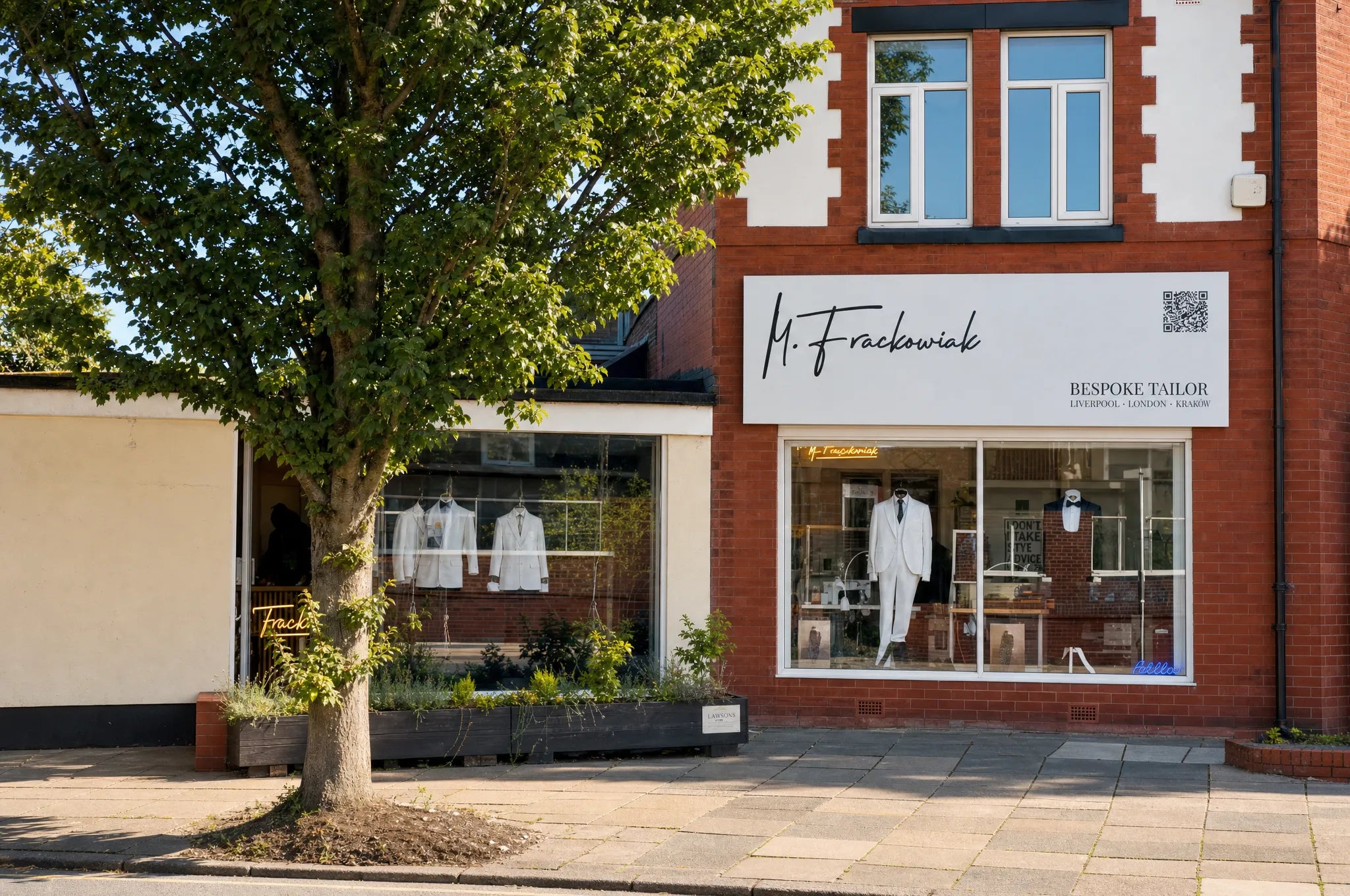
Article: How to Choose the Best Bespoke Tailor in Liverpool
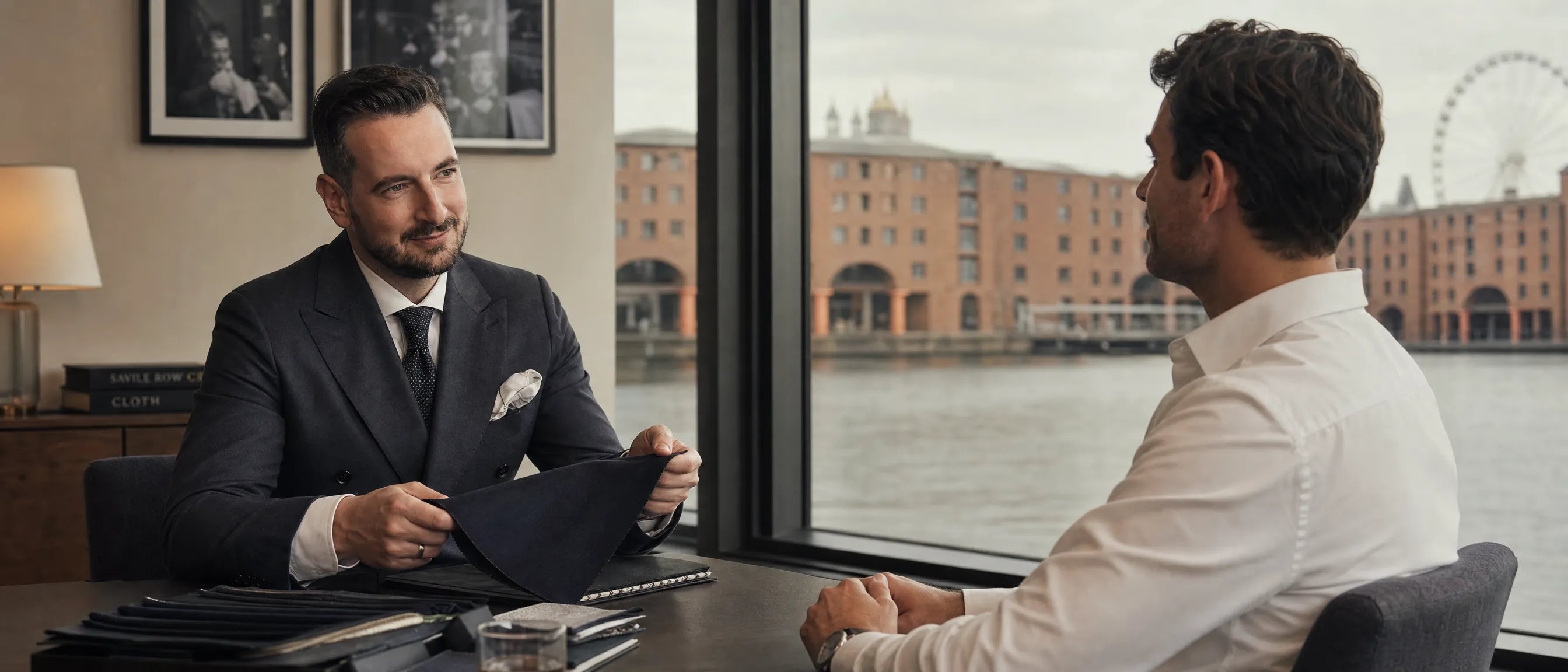
How to Choose the Best Bespoke Tailor in Liverpool
I want to be honest with you before this article goes any further.
You typed "best bespoke tailor in Liverpool" into Google because you're trying to make a decision. Maybe you have a wedding coming up. Maybe you've reached a point in your career where the suits you've been wearing no longer match the level you're operating at. Maybe you've simply worn enough ill-fitting jackets to know that there has to be something better, and you're finally ready to find it.
What you'll find when you search is a list of names. What you won't find, or rarely find, is someone willing to explain what you should actually be evaluating. The questions that matter. The things that separate a suit built for you from a suit adjusted to fit you. The difference between a tailor who makes clothes and a tailor who manages how you're perceived.
That's what this article is. Not a directory. A framework.
The First Problem: "Bespoke" Means Different Things to Different People in Liverpool
This is where most men get confused, and where most tailors don't help.
Bespoke is a specific word with a specific meaning. Historically, it referred to a garment that had been "spoken for," commissioned and built entirely for one person, from a pattern that existed for no one else. The pattern was drafted from scratch. The construction was done by hand. The suit was the product of a relationship between one tailor and one client, built over multiple fittings, refined until it was right.
That process still exists. I do it. But the word "bespoke" is now used across a much wider range of services, from genuinely hand-cut suits to slightly adjusted made-to-measure, to off-the-rack with a monogram on the lining.
This is not always deliberate deception. The industry has allowed the language to drift, and most buyers don't know enough to push back.
So before anything else: understand what you're actually asking for.
Genuine bespoke: means a new pattern, cut from scratch for your measurements, your posture, your proportions. The suit is built from that pattern by hand, fitted on your body in progress, refined through multiple appointments. A floating canvas chest, hand-padded. Lapels shaped by hand. Buttonholes worked in silk twist. A process that takes weeks and produces something that has never existed before and will never exist again for anyone else.
Made-to-measure: means an existing block pattern adjusted to your measurements. The result can be very good. The fit will be better than off-the-rack. But it is a different category of garment, made by a different process, and it should be understood and priced as such.
When you meet any Liverpool tailor for the first time, ask this directly: do you cut a new pattern from scratch for each client, or do you work from an existing block?
If the answer involves hesitation, deflection, or a sudden enthusiasm for talking about fabric swatches, you have your answer.
What I Look for When I Assess My Own Work, and What You Should Look for in Any Tailor
I've been cutting suits in Liverpool for seventeen years. What I'm about to describe is the standard I hold myself to, and the standard you should expect from anyone charging bespoke prices.
The consultation comes before the tape measure.
The first thing I want to know about a new client is not their chest size. It's their life. What rooms do you walk into? What does a Tuesday look like versus a Thursday? Do you travel between climates, Riyadh and London, Manchester and Edinburgh, and does the suit need to perform across all of them? Are you standing at a podium or sitting through six-hour negotiations? Do you want to be noticed or to be authoritative without drawing attention?
These questions shape every decision that follows: the cloth weight, the silhouette, the shoulder structure, the trouser cut. A tailor who reaches for the tape measure before they've asked a single question is telling you something important about their process. They are thinking about the garment. I think about the man first. The garment is the result.
The construction should be visible and explainable.
Ask to see inside a suit. Ask to hold a jacket that hasn't been lined yet. What you are looking for is a floating canvas, a layer of horsehair or woven linen, hand-stitched to the chest piece, that gives the jacket its shape. This canvas moves with your body over time. It softens. It adapts. After ten years of wear, a suit built on a floating canvas will have moulded to your frame in a way that nothing else can replicate.
A fused jacket bonds this layer to the cloth with adhesive. It looks fine initially. After a handful of dry cleans, the bond begins to break down and the chest develops a characteristic bubbled appearance that cannot be repaired. The suit is finished. This is not a minor technical detail. It is the difference between a suit that improves with age and one that degrades. Any tailor charging bespoke prices should be building on canvas. If they can't explain the construction they're using, ask them to.
The cloth should come from mills you can verify.
I work with Holland & Sherry, Scabal, Loro Piana, Vitale Barberis Canonico, and Piacenza. These are the names that represent the best of English and Italian weaving. They have been supplying Savile Row for generations. Their cloth is traceable, consistent, and produced to a standard that cheap alternatives cannot match.
When a tailor recommends a fabric, ask the mill name. Ask the weight in grams per metre. Ask why they're recommending it for your specific purpose. A tailor who understands their craft will explain that to you without being asked. If they can't name the mill, or if their cloth library consists of unnamed sample books with no provenance information, that tells you something.
The timeline should be honest.
A genuine bespoke suit takes a minimum of six to eight weeks from consultation to final fitting. Some suits, particularly those involving complex construction or multiple garments in the same commission, run to twelve weeks. If you're being told "bespoke in two weeks," what you are being sold is not bespoke. Made-to-measure can be delivered in that window, and a good made-to-measure suit is a legitimate product. But it isn't bespoke, and it shouldn't be priced or described as such.
For the Groom: What a Bespoke Wedding Suit Changes
More men come to me for weddings than for any other single occasion. It is where I see the difference most clearly between men who have been in a correctly fitting suit before and men who haven't.
A suit that fits you, genuinely fits you, built for your frame and your posture and the way you carry yourself, removes friction. You stop thinking about your jacket. You stop adjusting your collar between photographs. You stop feeling the pull across the back when you reach out to take your partner's hand. You are simply present. As you intended to be.
I've had clients come back after their wedding and tell me they didn't realise how much their previous suits had been working against them until they wore one that didn't. That is not a small thing on a day where presence is everything.
If you are getting married in Liverpool or the North West, begin this process at least six months before the date. Nine months is better. This is not me being precious about my schedule. It's the reality of what the process requires: consultation, pattern drafting, construction, fitting, refinement. Compressed into three months, corners get cut. Compressed into six weeks, it isn't bespoke at all.
If your date is closer than six months and you are set on bespoke, call me and we'll have an honest conversation about what's achievable. If it isn't achievable in the timeframe, I'll tell you that directly and point you toward the best alternative.
For the Professional: What Your Current Suit Is Actually Costing You
Most professional men in Liverpool are wearing suits that fight their bodies.
Not conspicuously. The suit isn't wrong in a way anyone would point to. The trousers break at the right point. The lapels are an acceptable width. The jacket doesn't gap at the chest, or at least, not when you're standing still and holding a particular posture.
But it was built for a block pattern representing a composite average man. And that man isn't you. He's never quite anyone.
So the shoulder sits slightly forward. There's a drag line across the back when you move. The collar stands away from your shirt by two or three millimetres, not enough to look undressed, but enough to catch your own eye in the mirror and register, somewhere below conscious attention, as wrong.
In professional environments, a boardroom in Liverpool city centre, a client meeting at one of the KPMG offices on Exchange Flags, a dinner at the Titanic Hotel where the room is paying attention, how you present yourself is part of how you are assessed. Not all of it. But more than most men are comfortable admitting.
The men I work with in Liverpool are not vain. They are serious. They have reached a point in their careers where they understand that their presence is a professional asset, and they are done leaving it to a changing room mirror and a suit that was built for someone else.
A bespoke suit does not make you a different person. It removes the gap between how you present and who you are. That's all. And it turns out that's quite a lot.
Why Liverpool, and Why Now
There is a version of this conversation that ends with: yes, but for bespoke that's really worth it, you need to go to London.
I want to address that directly, because I hear it and I understand where it comes from.
Savile Row is the benchmark. It is where the tradition was codified and where the craft has been refined across two centuries of British tailoring. If you want to commission a suit from one of the great houses, Anderson & Sheppard, Huntsman, Chittleborough & Morgan, that is a legitimate and serious choice that I respect entirely.
But what Savile Row requires, the travel, the multiple London visits for fitting, the waiting lists that run into months or years, the price structure that reflects the address, is not accessible to most men, and not necessary for most purposes.
What I do at the Royal Albert Dock is not an approximation of Savile Row. It is the same construction method, hand-cut pattern, floating canvas, hand-worked buttonholes, silk thread, delivered in Liverpool, to your schedule, at your office or your home if that serves you better.
I developed my craft working alongside Savile Row cutters. Every suit that leaves my Liverpool workroom is built to that standard. The geography is different. The result is the same.
If you're in Liverpool, or anywhere across the North West, and you've been telling yourself that proper bespoke means London, that is no longer a reason not to begin.
The Seven Questions to Ask Any Liverpool Tailor Before You Commit
These are the questions I would ask if I were a client, and the answers that would tell me whether I was in the right place.
-
Is this genuine bespoke or made-to-measure? Ask for the distinction to be explained clearly. If the answer is evasive, the service may be made-to-measure marketed as bespoke.
-
Do you cut your own patterns, or is production outsourced? Some services take your measurements in Liverpool and send the work abroad. That is not British bespoke tailoring. Know where the suit is actually being made.
-
What canvas construction do you use: full canvas, half canvas, or fused? The answer should come immediately and confidently. A tailor using floating canvas knows it and is proud of it.
-
Which cloth mills do you work with? If they can't name specific mills, Holland & Sherry, Scabal, Loro Piana, Dugdale, Vitale Barberis, ask more questions.
-
How many fittings are included, and what's the process if the fit isn't right at handover? A tailor confident in their work answers this without hesitation or defensiveness.
-
What is your realistic lead time, and is that for bespoke or made-to-measure? Genuine bespoke takes six to eight weeks minimum. Anything shorter is a different service.
-
Can I see an unlined jacket or work in progress? Not just photographs of finished suits. The interior of the construction. If they can show you this, they're proud of what's inside. If they can't, ask why.
Frequently Asked Questions
What is the price of a bespoke suit in Liverpool?
My bespoke suits start from £1,700, which includes the consultation, a fully hand-cut and hand-finished suit in premium British or Italian cloth, and all fittings. That is the entry point for genuine bespoke built to this standard in Liverpool.
How long does a bespoke suit take in Liverpool?
Six to eight weeks minimum for a single suit. I do not compress this timeline, because the construction process, hand-padding the canvas, working the buttonholes, conducting multiple fittings and refinements, cannot be meaningfully shortened without affecting the result.
Do you come to my home or office in Liverpool?
Yes. I offer private consultations and fittings at your home, your office, or the Royal Albert Dock studio, across Liverpool and the North West. There is no premium or additional charge for this. A tailor who comes to you understands that the suit is being built for your life, not your ability to rearrange your diary.
Is bespoke worth it for a wedding suit, or should I use made-to-measure?
If you have the budget and the lead time, bespoke is always the right answer for a wedding suit. You will wear the suit in photographs you'll look at for the rest of your life, on a day where you need to be fully present rather than managing how your jacket is sitting. Beyond the wedding, a correctly built bespoke suit becomes one of the most-worn garments in your wardrobe. Made-to-measure is a legitimate alternative if the timeline or budget doesn't allow for bespoke. Suit hire is a last resort.
Can you make a suit that works for an unusual body shape or physique?
Yes, and this is the most compelling case for bespoke over anything else. If you have significant asymmetry between your left and right sides, a shorter or longer torso than standard, broader shoulders, a high right hip, a surgical scar that affects how cloth hangs, a standard block pattern will never serve you correctly. A bespoke pattern is drafted entirely from your measurements and your specific physical reality. It is not an approximation. It is built for you.
What fabrics do you recommend for a Liverpool professional wardrobe?
For year-round professional use in the North West, where you'll move between heated interiors and British weather across the same day, I typically recommend a 280–320g British wool from Holland & Sherry or Vitale Barberis. Heavy enough to hold its structure and press well, light enough to be worn ten months of the year. For specific occasions, travel, or warmer months, I'll adjust accordingly. We make that decision together at the consultation, based on your schedule and how the suit will actually be used.
What's the difference between what you do and a Savile Row suit?
The construction method is the same: hand-cut pattern, floating canvas chest, hand-worked buttonholes. The cutters I trained alongside work on Savile Row. The cloth comes from the same English and Italian mills. What's different is that you don't travel to London, you don't wait on a list that runs eighteen months, and I come to you. The standard is Savile Row. The experience is built for how you actually live.
How do I know you're the right tailor for me before I book?
Message me. Tell me what you're trying to achieve, the occasion, the role, the impression, the wardrobe gap. I'll tell you honestly whether I'm the right fit for what you need. If I'm not, I'll say that too. The consultation is where we find out. It costs you an hour. What it tells you is worth considerably more than that.
The Tailor You're Looking For
The best tailor in Liverpool for you is not necessarily the one with the longest history or the most famous clients or the studio on the most prominent street.
It's the one who asks the right questions before they pick up a tape measure. Who can show you the inside of their work and explain every decision. Who tells you the truth about timeline, about what's achievable, about whether this is the right moment or the right budget for what you're asking. Who builds the relationship before the suit, because they understand that the relationship is what makes the suit right.
I have been doing this in Liverpool for twelve years. My studio is at the Royal Albert Dock. My clients are professionals, grooms, executives, and men who have simply reached the point where they want to be dressed correctly for the life they are actually living.
If that's where you are, I'd like to start with a conversation.